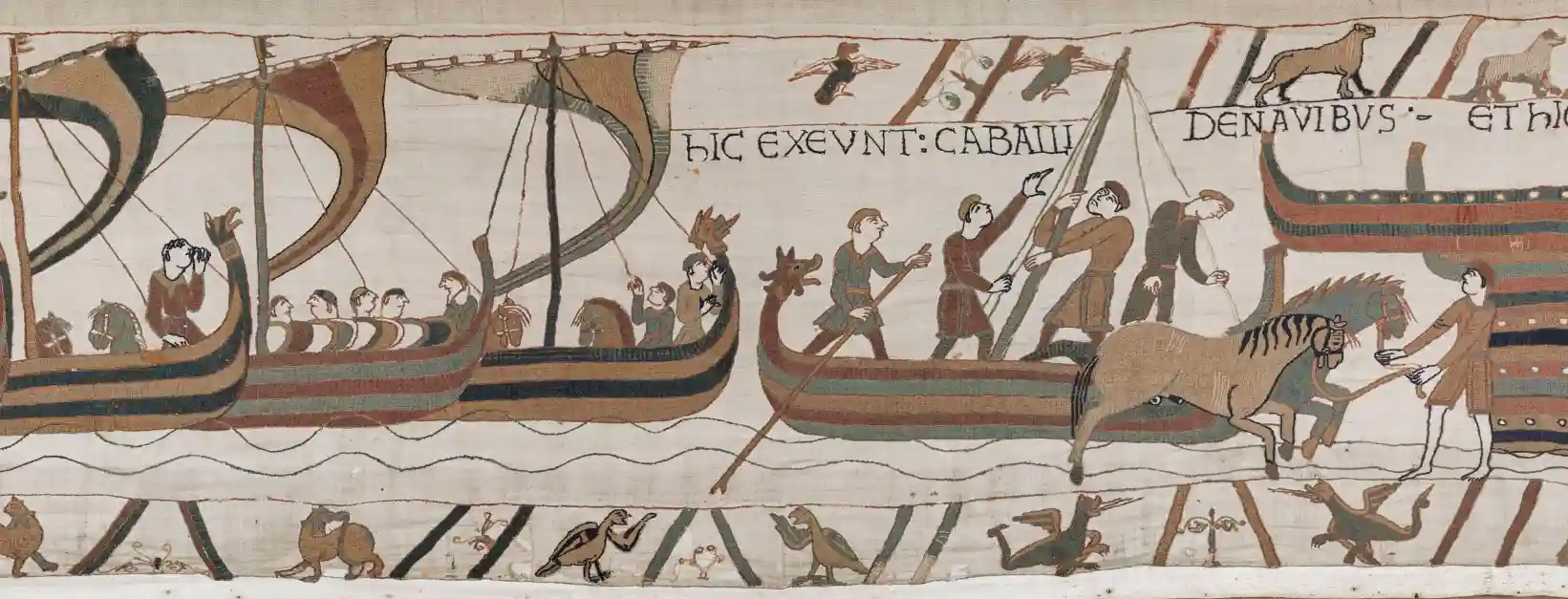
The year 1066 stands as one of the most transformative periods in European history, defined primarily by the Norman Conquest of England. However, the year was also marked by global events and a chaotic struggle for power that preceded the famous Battle of Hastings.
The Looming Crisis
Beyond politics, 1066 was a year of celestial and global omens. In March, Halley’s Comet appeared in the sky—an event later immortalized in the Bayeux Tapestry as a portent of doom for King Harold. Elsewhere, the Granada massacre in Spain and the establishment of the Abu Hanifa Mosque in Baghdad occurred, though these were overshadowed in the West by the seismic shifts in Britain.
The Norwegian Invasion
The first major threat to Harold’s reign came from the north. In September, Harald Hardrada, supported by Harold’s exiled brother Tostig, invaded Yorkshire. After defeating English earls at the Battle of Fulford, the Vikings took York. Harold Godwinson performed a legendary forced march from London to the north, surprising and defeating the Norwegians at the Battle of Stamford Bridge on September 25. Hardrada and Tostig were killed, effectively ending the Viking Age in England.
The Norman Conquest
While Harold was in the north, the winds in the English Channel shifted. On September 28, William of Normandy landed his invasion fleet at Pevensey. Harold was forced to march his exhausted army 200 miles back south.
On October 14, the two forces met at the Battle of Hastings. The English held a strong defensive position atop Senlac Hill, but after a day of brutal fighting, the Norman cavalry and archers broke the English shield wall. Harold was killed, and the Anglo-Saxon resistance crumbled. On Christmas Day 1066, William was crowned King of England in Westminster Abbey.
Aftermath and Legacy
The conquest did not end in 1066; William spent years brutally suppressing rebellions, most notably during the "Harrying of the North." The impact was total: the Anglo-Saxon elite was replaced by a Norman aristocracy, French became the language of government, and the Domesday Book (1086) was commissioned to catalogue the newly conquered lands. This pivot away from Scandinavia and toward Continental Europe fundamentally reshaped the English language, law, and architecture for centuries to come.