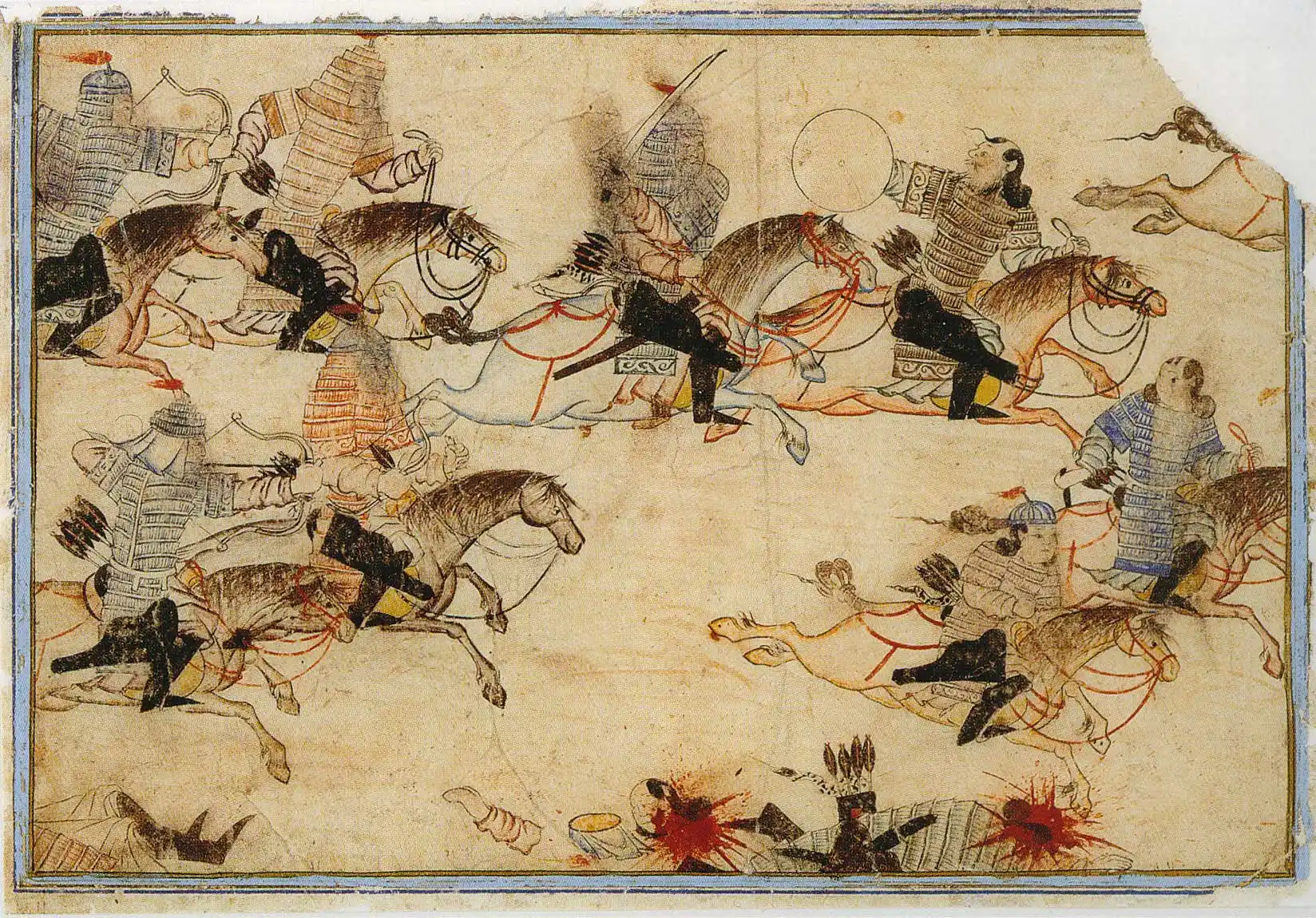
The Mongol Empire, recognized as the largest contiguous empire in history, originated from the fragmented steppes of East Asia. Before the 13th century, the Mongolian plateau was inhabited by fiercely independent, warring nomadic confederations, including the Merkits, Naimans, Tatars, and Mongols. It was out of this volatile environment that a brilliant young leader named Temüjin rose to prominence, overcoming early poverty, tribal betrayals, and the assassination of his father to gradually consolidate power.
The pivotal turning point in global history occurred in 1206 CE. After years of strategic military campaigns and shifting alliances, Temüjin successfully defeated his final rivals, including his former blood brother, Jamukha. In 1206, a grand traditional assembly known as a kurultai was convened. At this historic gathering, the unified tribal leaders formally recognized Temüjin as the undisputed ruler of the newly forged Great Mongol Nation.
Upon achieving this unprecedented unification, Temüjin was bestowed the formidable title of Genghis Khan. His immediate actions as the supreme ruler involved a radical restructuring of traditional steppe society. Genghis Khan systematically abolished the old, fracture-prone tribal divisions and implemented a revolutionary decimal military system. Warriors were reorganized into fiercely disciplined, cross-tribal units of tens, hundreds, thousands, and ten thousands, transforming a loosely connected nomadic people into a highly unified military machine.
Furthermore, Genghis Khan instituted a comprehensive new code of imperial law known as the Yassa. This strict legal framework prohibited the kidnapping of women, banned theft, and forbade internal fighting among the newly united Mongols. He also mandated religious tolerance across his domains and ordered the creation of the first written Mongol script. By decisively uniting these disparate nomadic tribes in 1206 CE, Genghis Khan laid the unbreakable foundation for an expansionist empire that would soon conquer vast territories from the Pacific Ocean to Eastern Europe.