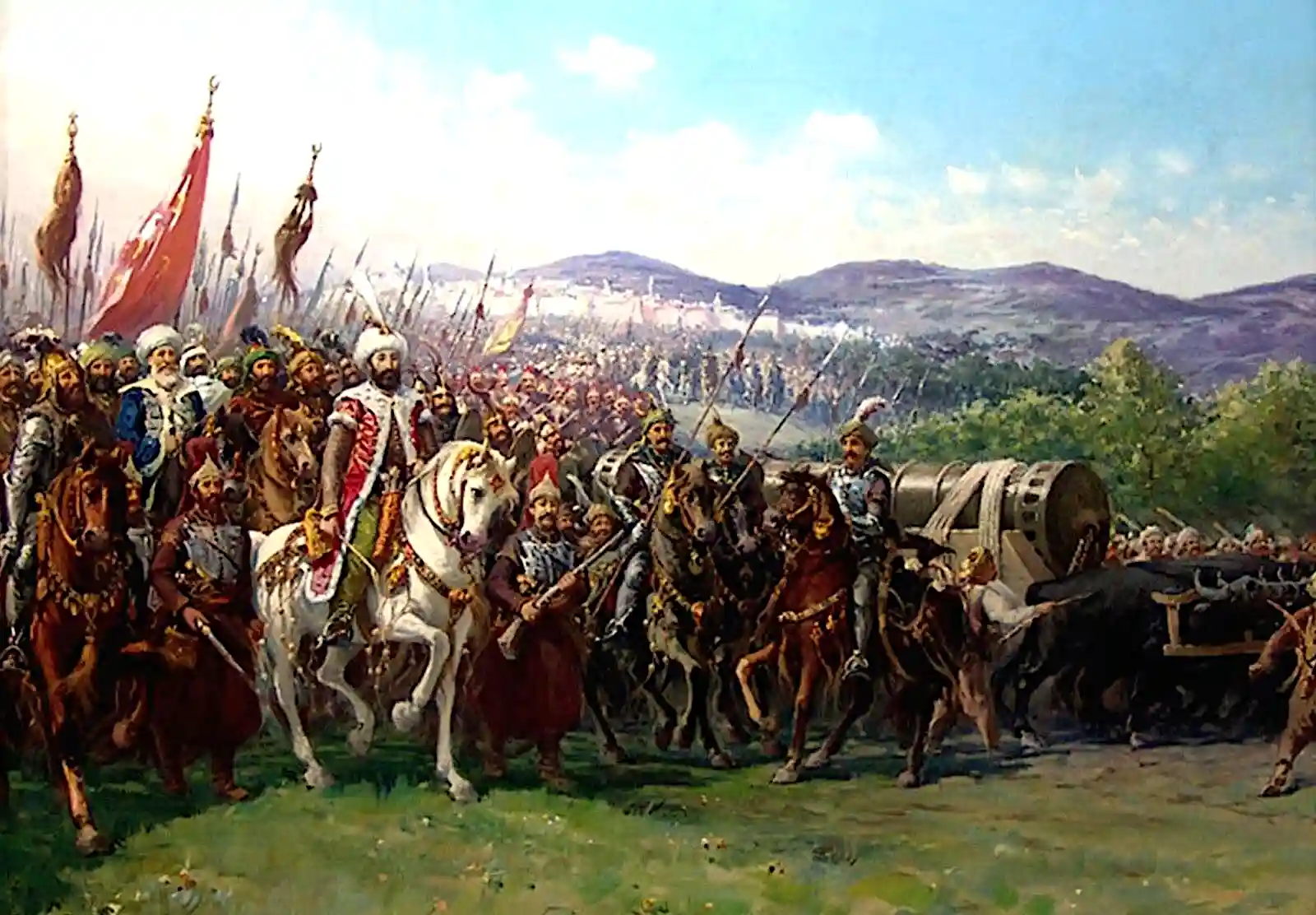
The Fall of Constantinople on May 29, 1453, marked the definitive end of the Byzantine Empire and is widely regarded by historians as the conclusion of the Middle Ages. The 53-day siege was led by the 21-year-old Ottoman Sultan Mehmed II, whose victory transformed the regional landscape and established the Ottoman Empire as a dominant world power.
By the mid-15th century, the Byzantine Empire had dwindled to little more than the city itself. Emperor Constantine XI Palaiologos sought aid from a divided Western Christendom, but despite some assistance from Genoese and Venetian volunteers, the defenders were vastly outnumbered. Roughly 7,000 to 10,000 soldiers faced an Ottoman force estimated between 60,000 and 80,000.
The siege was a turning point in military technology. Constantinople’s Theodosian Walls, which had stood impregnable for a millennium, were finally breached by Mehmed’s massive bronze cannons, including the legendary "Basilic." While a massive chain blocked the Golden Horn to protect the city's harbor, Mehmed bypassed it by transporting his fleet overland on greased logs.
The final assault began in the early hours of May 29. After waves of irregular troops exhausted the defenders, the elite Janissaries breached the walls. Constantine XI is said to have died fighting in the streets, though his body was never identified. Following the conquest, Mehmed allowed his troops three days of pillaging before restoring order and declaring Constantinople the new Ottoman capital.
The fall had profound global consequences. It severed key Silk Road trade routes, encouraging European explorers to seek maritime alternatives to Asia, which eventually led to the Age of Discovery. Furthermore, the flight of Greek scholars to Italy sparked a revival of classical learning, fueling the Renaissance. For the Ottomans, the victory solidified their status as the "Third Rome" and the primary power of the Islamic world.