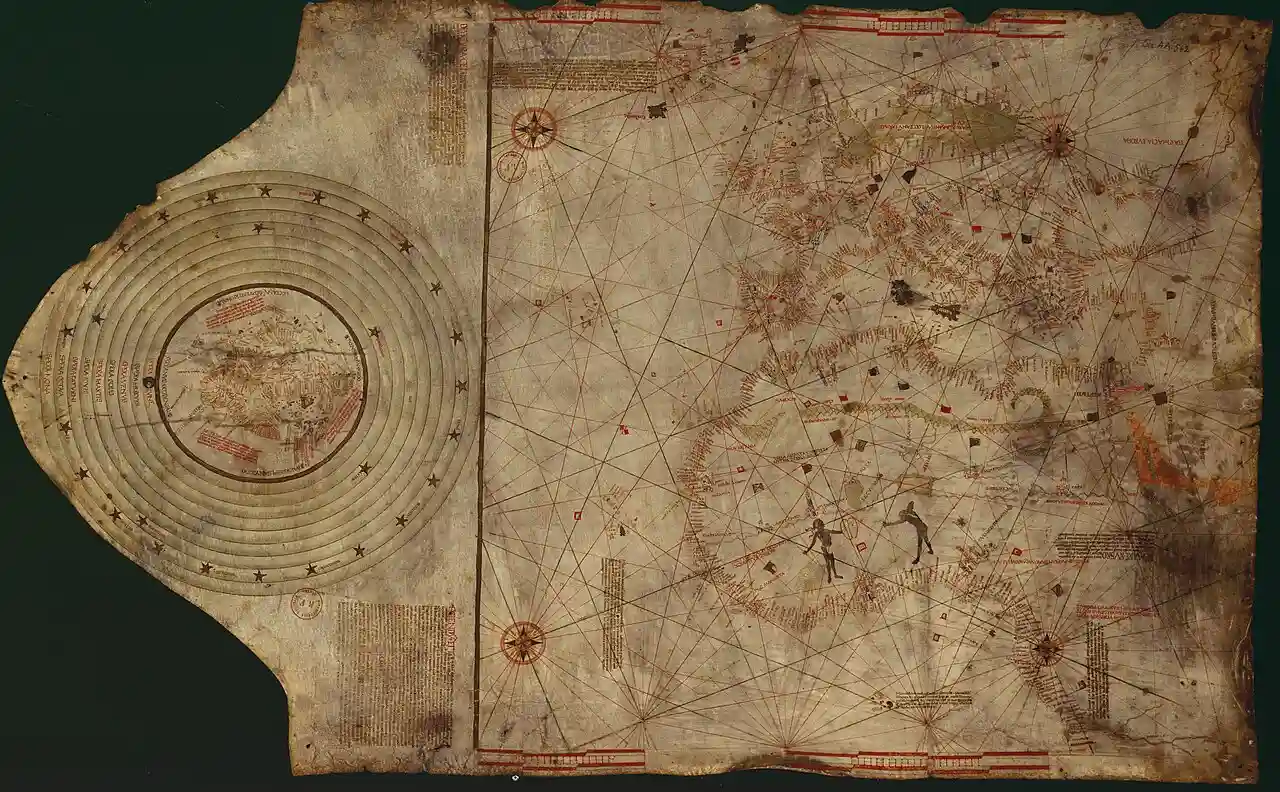
Between 1492 and 1504, Christopher Columbus led four Spanish-funded expeditions across the Atlantic Ocean. Though his primary objective was to find a westward maritime route to the "Indies" (Asia) to access the lucrative spice trade, his voyages resulted in the accidental European discovery of the American continents.
On his first voyage, Columbus departed Spain on August 3, 1492, with three ships: the Santa María, the Pinta, and the Niña. After a grueling five-week journey across the Atlantic, land was sighted on October 12, 1492. Columbus landed on an island in the Bahamas, which he named San Salvador (indigenously known as Guanahani). Believing he had reached the East Indies, he referred to the inhabitants as "Indios," a naming error that led to the term "West Indies" for the Caribbean. He proceeded to explore the coasts of Cuba and Hispaniola, establishing the first European settlement, La Navidad, after the Santa María ran aground.
While Columbus never realized he had found a "New World"—maintaining until his death that he had reached the fringes of Asia—his subsequent three voyages (1493, 1498, and 1502) further expanded European knowledge of the region. He explored the Lesser Antilles, Puerto Rico, Jamaica, and the coasts of Central and South America.
The "discovery" was a pivotal turning point in world history. It initiated the Age of Discovery, leading to the permanent contact between the Old and New Worlds. This encounter sparked the Columbian Exchange—a massive transfer of plants, animals, culture, and technology—but also initiated centuries of European colonization, the spread of devastating diseases to indigenous populations, and the trans-Atlantic slave trade. Ultimately, Columbus's voyages bridged two hemispheres and laid the foundations for the modern era.