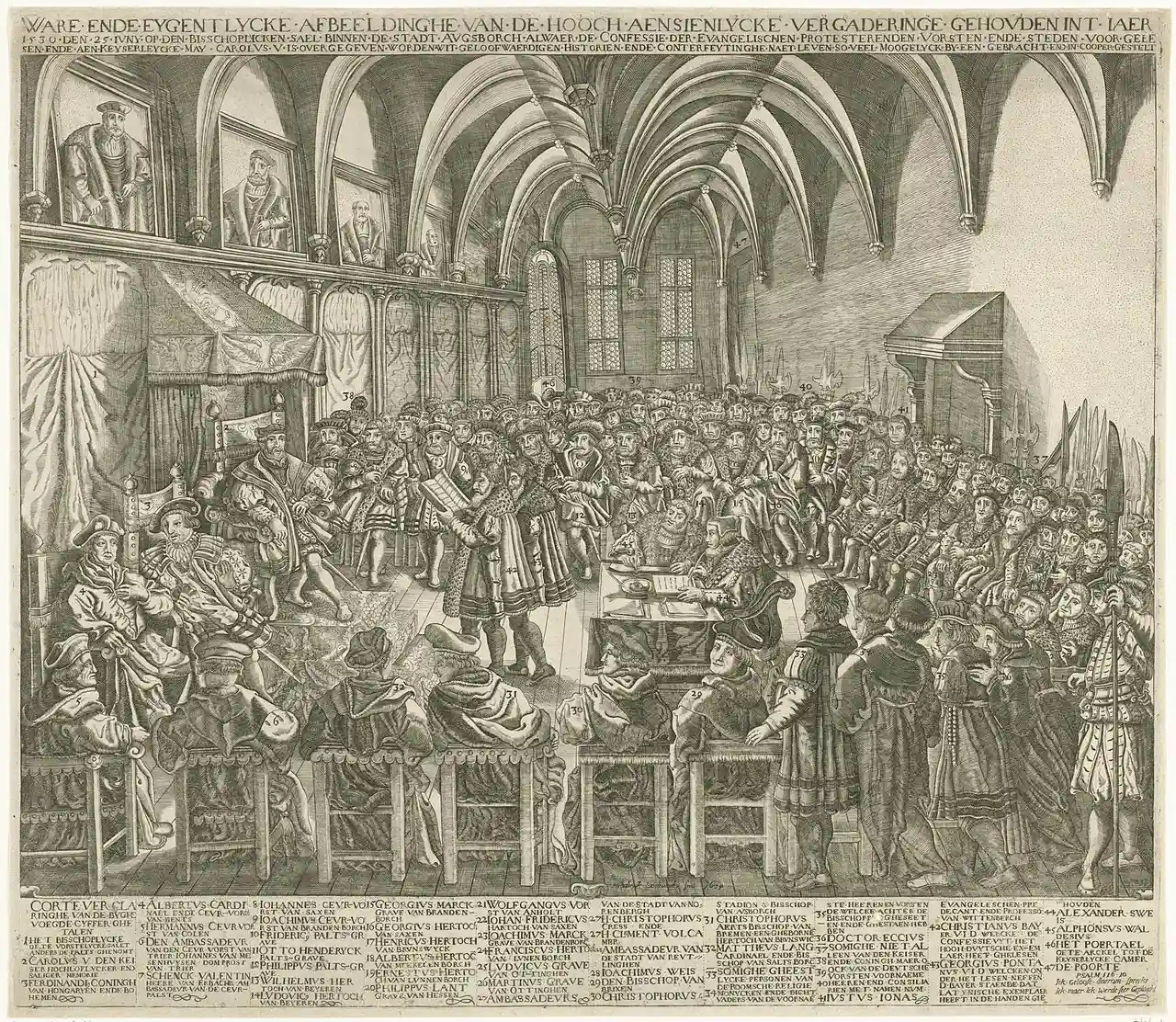
The Protestant Reformation was a major religious, political, and cultural movement in sixteenth century Europe that aimed to fundamentally reform the traditional practices of the Roman Catholic Church. It traditionally began in 1517 when German theologian Martin Luther published his 95 Theses, protesting clerical abuses such as the sale of indulgences. The movement was built on core theological principles, primarily sola scriptura, the belief that the Bible is the sole source of religious authority, and sola fide, the doctrine that salvation is granted through faith alone rather than good works. Aided by the printing press, Luther’s ideas rapidly spread across the continent, challenging Papal authority and fracturing Western Christianity. While earlier reformers like John Wycliffe and Jan Hus had laid the groundwork, Luther’s defiance ignited a revolution.
As the movement expanded across borders, it rapidly diversified into several distinct theological branches. In Switzerland, Huldrych Zwingli and John Calvin developed reformed theologies. Calvinism, emphasizing predestination, became highly influential in Scotland, France, and the Netherlands. The English Reformation took a political route; King Henry VIII separated the Church of England from Rome in 1534 to secure an annulment, though the church gradually adopted Protestant theology. Radical reformers, such as the Anabaptists, pushed for profound changes like adult baptism and the separation of church and state. The Catholic Church responded with the Catholic Counter Reformation, initiated by the Council of Trent, which addressed internal corruption while aggressively reaffirming traditional dogmas and condemning Protestantism.
The religious schism triggered devastating conflicts known as the European wars of religion, culminating in the catastrophic Thirty Years War. This conflict ravaged the Holy Roman Empire, causing immense loss of life and property. The bloodshed was halted by the Peace of Westphalia in 1648, which ended the era of religious wars by allowing sovereign rulers to dictate the official religion of their states. Beyond theology, the Reformation profoundly shaped the modern world. It accelerated the rise of early capitalism, promoted mass literacy by encouraging individuals to read the Bible in their native languages, and laid the early conceptual groundwork for modern political ideas regarding individual conscience and religious tolerance.