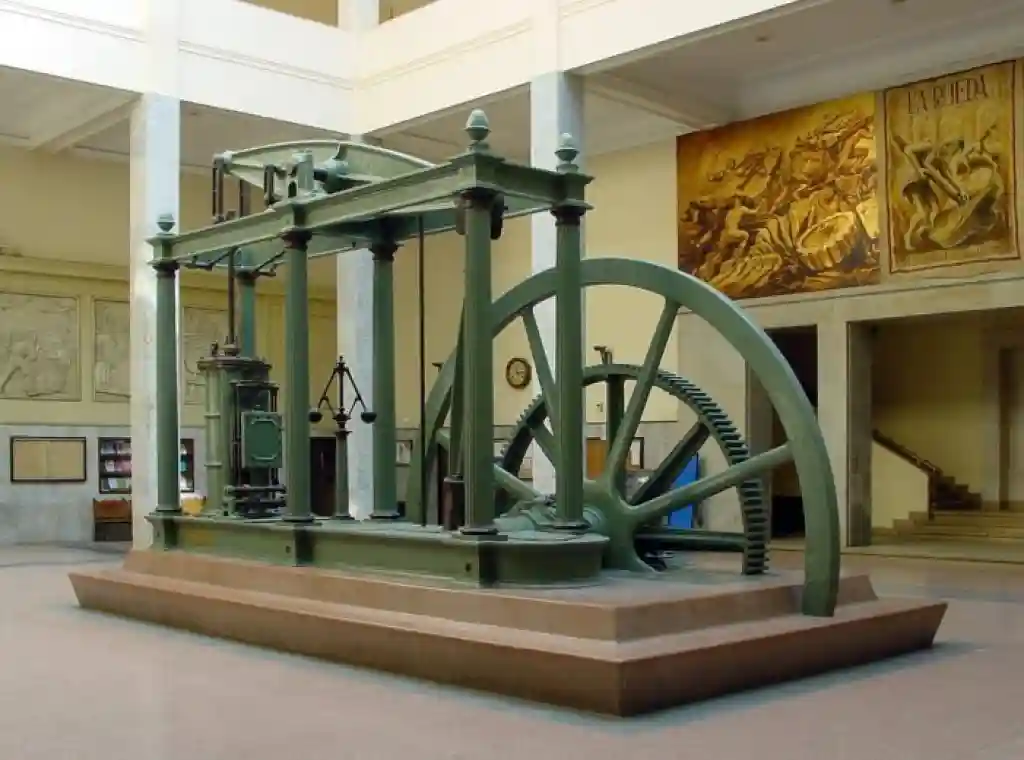
The history of the steam engine traces back to rudimentary devices, but its transformation into a world-changing power source required overcoming severe mechanical inefficiencies. In the early eighteenth century, Thomas Newcomen developed the first practical atmospheric steam engine, primarily utilized to pump floodwater from deep coal mines. While revolutionary, the Newcomen engine suffered from a fundamental thermodynamic flaw. Cold water was injected directly into the main cylinder to condense steam and create a vacuum. This process meant the heavy cylinder was repeatedly heated and cooled during every stroke. Enormous amounts of thermal energy were wasted reheating the metal, making the engine exceedingly expensive to operate anywhere but directly beside coal mines.
The trajectory of steam power shifted dramatically when James Watt, a Scottish instrument maker, encountered these glaring inefficiencies. In 1763, while employed at the University of Glasgow, Watt was tasked with repairing a model Newcomen engine and was baffled by its insatiable consumption of steam. After rigorous investigation into the properties of heat, he realized the repeated cylinder cooling was the main culprit. In 1765, Watt conceived his brilliant solution: the separate condenser. By extracting the steam into a detached vacuum chamber to be condensed, the main cylinder remained permanently hot. This elegant solution bypassed the latent heat loss that plagued earlier designs, enabling unprecedented mechanical efficiency.
Recognizing the immense value of his breakthrough, Watt moved to protect his invention legally, culminating in his landmark 1769 patent. Titled "A New Invented Method of Lessening the Consumption of Steam and Fuel in Fire Engines," this patent is regarded as a pivotal document in technological history. The 1769 patent did not merely cover the separate condenser; it outlined a comprehensive system of critical improvements. It detailed the use of a steam jacket to enclose the cylinder to maintain its high temperature, the elimination of water for sealing the piston in favor of oil, and the idea of utilizing the expansive force of steam. These patented concepts successfully redefined the fundamental architecture of the steam engine.
Securing the 1769 patent was only the beginning of a grueling journey from theoretical concept to commercial reality. Translating Watt's design into a full-scale, functioning engine proved immensely difficult due to the crude manufacturing capabilities of the era. Creating a perfectly cylindrical barrel to ensure a tight piston seal was nearly impossible at first. Watt’s initial backer, John Roebuck, fell into bankruptcy, stalling progress. Fortunately, the rights to the 1769 patent were transferred to Matthew Boulton, a wealthy Birmingham manufacturer. The subsequent Boulton and Watt partnership provided vital capital. Advancements in metallurgy, specifically John Wilkinson’s precision boring machine, finally allowed Watt’s engine to be manufactured flawlessly.
The profound impact of James Watt’s 1769 patent on human history cannot be overstated, as it catalyzed the acceleration of the Industrial Revolution. By reducing coal consumption by up to seventy-five percent compared to Newcomen's design, Watt’s improved steam engine was no longer geographically restricted to regions with abundant coal. It became an economically viable prime mover that could be installed anywhere to provide continuous power. This flexibility enabled the widespread mechanization of textile mills, ironworks, and urban factories, shifting global society toward industrial mass production. Ultimately, the engineering principles enshrined in Watt's 1769 patent laid the mechanical groundwork for locomotives, steamships, and the dawn of the modern industrialized world.