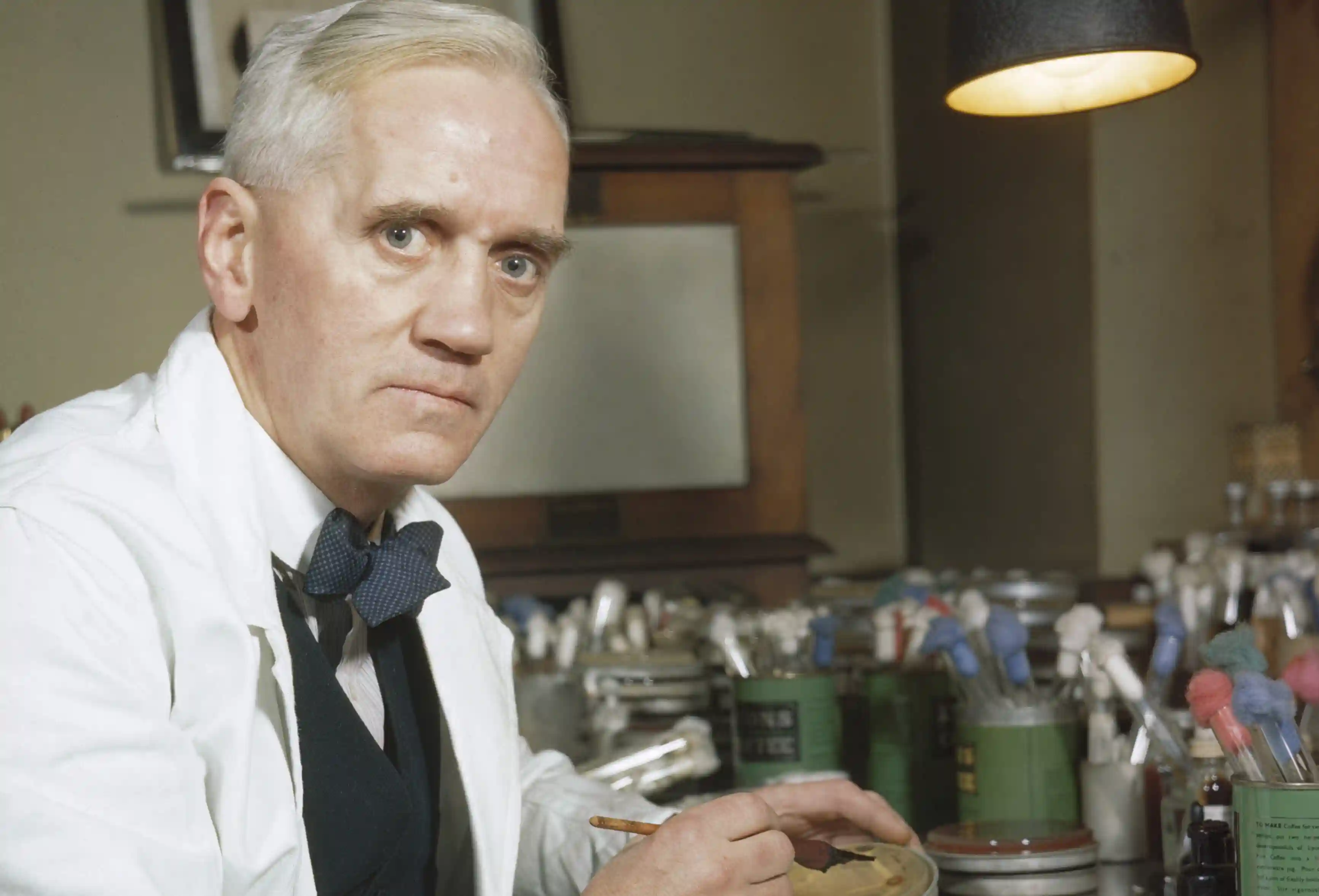
The year 1928 marked a watershed moment in medical history with the accidental discovery of penicillin by Alexander Fleming, a Scottish physician and bacteriologist. While working at St Mary's Hospital in London, Fleming was deeply involved in investigating the patterns of variation in Staphylococcus aureus, a common bacterium responsible for various dangerous infections. In August 1928, before leaving for a summer vacation with his family in Suffolk, Fleming inoculated several culture plates with the staphylococcus bacteria. To clear space for his colleague, Stuart Craddock, Fleming left the plates stacked in a corner of his laboratory bench rather than placing them in an incubator.
Upon returning to his laboratory on September 3, 1928, Fleming began reviewing the discarded culture plates with his former research scholar, Daniel Merlin Pryce. During this examination, they noticed something highly unusual on one of the plates that had its lid left slightly open. The culture had become contaminated with a distinctive blue-green mould. Crucially, Fleming observed that the bacterial colonies immediately surrounding the mould had been destroyed, whereas those further away continued to grow normally. Recognizing the significance of this clearing zone, Fleming famously remarked, "That's funny." He immediately photographed the plate and preserved the mould for further investigation.
Driven by this fortuitous observation, Fleming isolated the original mould and began cultivating it in fresh culture plates. After several days, he successfully grew large colonies and repeated the experiment, confirming the bacteria-killing results. He deduced that the mould was actively secreting a powerful antibacterial substance into its environment. By producing a culture broth of the mould, he concentrated this antibacterial component and began testing its efficacy. He quickly discovered that the substance was highly effective at destroying a wide range of dangerous Gram-positive bacteria, including the pathogens responsible for pneumonia, streptococcus, and diphtheria, while leaving Gram-negative bacteria largely unaffected.
Fleming sought to identify the specific fungus responsible for this miraculous substance. With the help of an Irish mycologist, Charles John Patrick La Touche, whose laboratory was located just below Fleming's, the mould was initially identified as Penicillium rubrum, though modern genomic analysis later confirmed it as Penicillium rubens. It is now widely believed that the contaminating fungal spores drifted upstairs from La Touche's lab through an open door. Seeking a less cumbersome term than "mould broth filtrate," Fleming officially coined the name "penicillin" on March 7, 1929.
This groundbreaking discovery was heavily reliant on pure chance. The rare weather conditions in London during that specific August provided the perfect environment: initial cold temperatures allowed the mould to grow, followed by a warmer spell that permitted bacterial growth. Without this precise sequence, the remarkable antibacterial properties of penicillin might have remained entirely unnoticed, delaying the dawn of the antibiotic age.