The year 1945 stands as one of the most pivotal years in human history, marking the conclusion of the deadliest global conflict ever recorded and the dramatic dawn of the nuclear age. As the year began, World War II was still raging, though the Axis powers were in rapid retreat. In Europe, the Allied forces relentlessly closed in on Nazi Germany. The Soviet Red Army launched massive offensives, besieging Berlin, while Western Allies crossed the Rhine. The ferocious Battle of the Bulge had concluded with an Allied victory, further crippling the German war machine. The scale of destruction across Europe was unprecedented, with cities in rubble and millions displaced. By spring, the totalitarian regime that had terrorized Europe was on the brink of total collapse.
The culmination of the European conflict arrived in the spring, bringing a definitive end to Adolf Hitler's Third Reich. In April, as Soviet troops fought block by block in Berlin, Mussolini was captured and executed by Italian partisans. Days later, on April 30, Hitler committed suicide in his bunker, leaving his shattered nation defeated. This led to the unconditional surrender of German armed forces, signed on May 7 and celebrated on May 8 as Victory in Europe (V-E) Day. Concurrently, the liberation of concentration camps by advancing troops exposed the full, horrifying magnitude of the Holocaust to the global public. The euphoria of V-E Day was profoundly tempered by the staggering human cost and the grim realization of systematic Nazi atrocities.
As the war in Europe concluded, the Pacific theater remained locked in brutal combat, prompting a radical escalation in military technology. Deep in the deserts of New Mexico, the top-secret Manhattan Project reached its terrifying climax. On July 16, 1945, the United States successfully detonated the world’s first atomic weapon during the Trinity test. The blinding flash and towering mushroom cloud that erupted physically manifested the dawn of the nuclear age. Lead scientist J. Robert Oppenheimer famously recalled the Bhagavad Gita: "Now I am become Death, the destroyer of worlds." This monumental scientific achievement fundamentally altered warfare and geopolitics forever. For the first time, mankind possessed the capability for its own complete annihilation, casting a permanent shadow of existential dread over humanity.
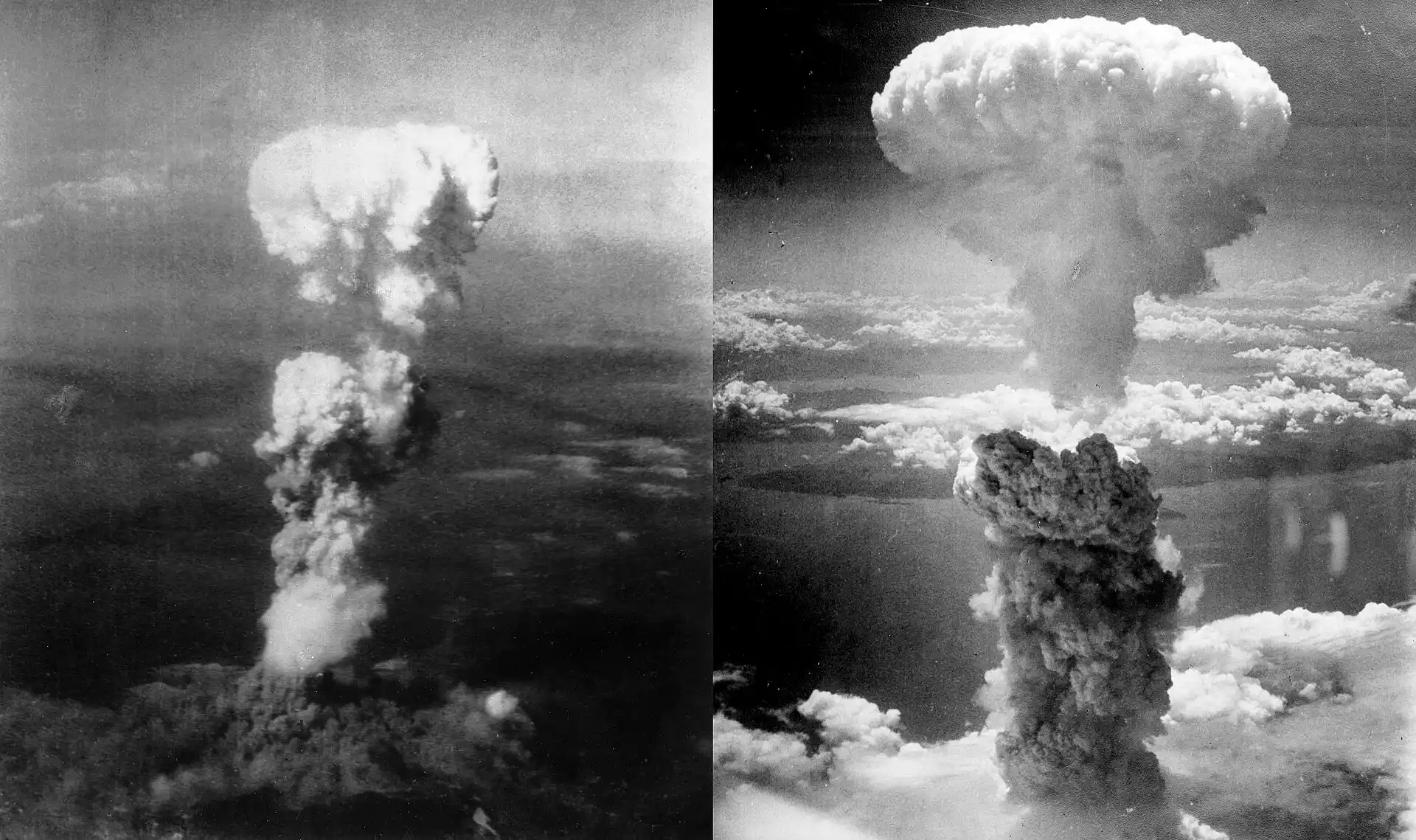
The newly unlocked power of the atom was swiftly deployed to force the capitulation of the Empire of Japan. Despite suffering immense losses in island-hopping campaigns and enduring relentless firebombing, Japanese military leadership refused to surrender. In a deeply controversial decision, U.S. President Harry S. Truman authorized the use of atomic weapons. On August 6, the bomb "Little Boy" obliterated Hiroshima, killing tens of thousands instantly. Three days later, "Fat Man" was dropped on Nagasaki with catastrophic results. Concurrently, the Soviet Union rapidly invaded Manchuria. Faced with unprecedented atomic destruction and a two-front war, Emperor Hirohito intervened. Japan's unconditional surrender was announced on August 15 and formally signed aboard the USS Missouri on September 2, officially ending World War II.
The cataclysmic destruction of the war underscored an urgent need for a new international framework to prevent future conflicts. In 1945, efforts to establish lasting peace culminated in the creation of the United Nations. Between April and June, delegates from fifty nations gathered at the San Francisco Conference to draft the UN Charter, officially born on October 24. This organization was designed to foster international cooperation, promote human rights, and resolve disputes diplomatically. Meanwhile, victorious Allied leaders met at the Yalta and Potsdam conferences to determine the post-war fate of Europe and Germany. These pivotal meetings sought to rebuild nations but also highlighted growing ideological fractures between the democratic West and the communist Soviet Union, laying the groundwork for the Cold War.
Beyond the battlefields, 1945 was characterized by other significant events that shaped the post-war world. The Arab League was formed in Cairo to promote the political and cultural interests of Arab nations, reflecting shifting Middle Eastern dynamics. In Asia, the end of Japanese occupation sparked immediate movements for independence; figures like Ho Chi Minh and Sukarno proclaimed the independence of Vietnam and Indonesia, respectively, igniting decades of decolonization struggles. In literature, 1945 saw the publication of George Orwell's highly influential novella, Animal Farm, which critically examined the corruption of the Russian Revolution. Economically, the world began colossal reconstruction, aided by the new Bretton Woods institutions.