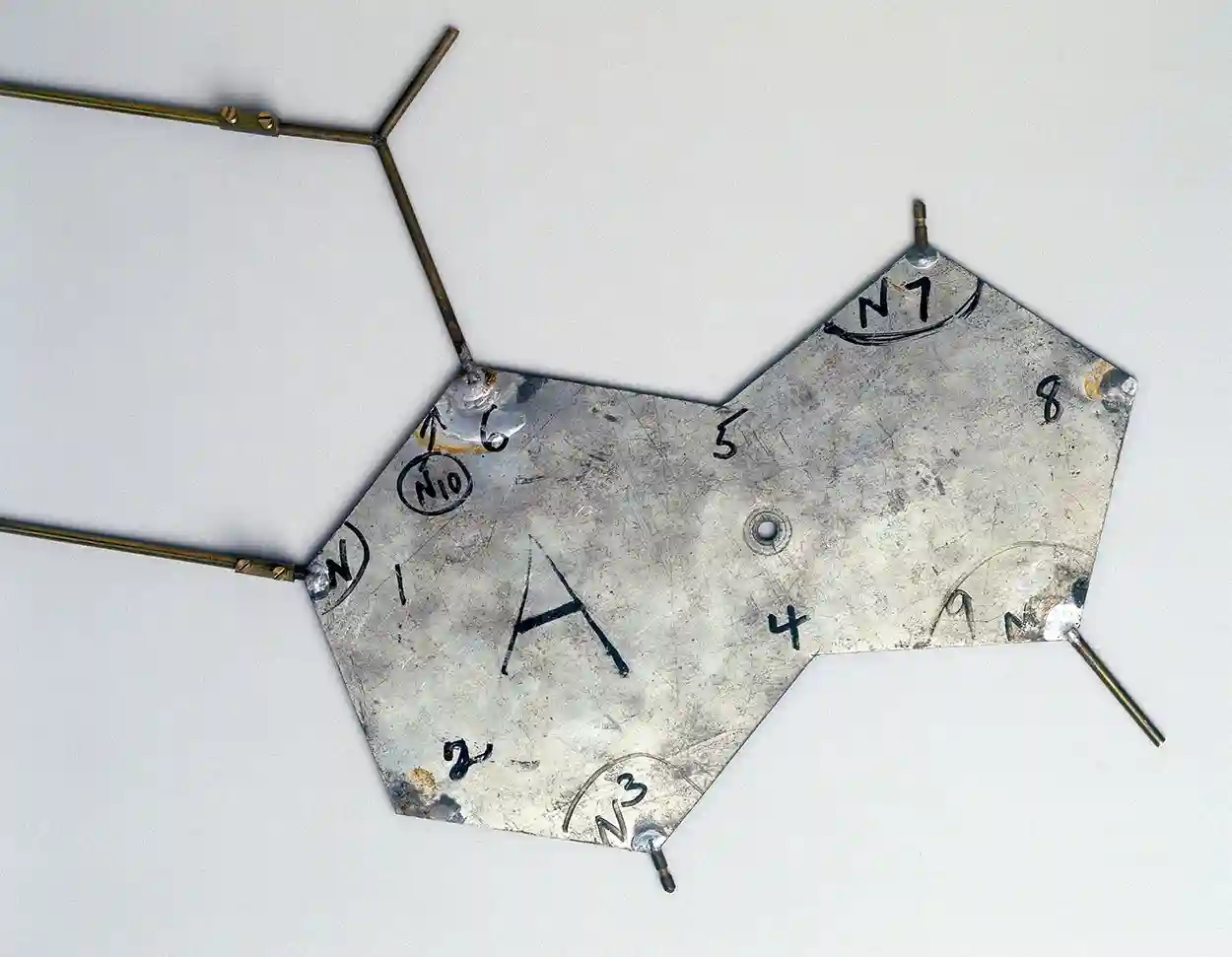
In April 1953, the scientific landscape was forever transformed when James D. Watson and Francis Crick published their landmark article, "Molecular Structure of Nucleic Acids: A Structure for Deoxyribose Nucleic Acid," in the journal Nature. This concise paper is widely celebrated as a "pearl" of science because it unlocked one of biology's most profound mysteries: how living organisms store and transmit genetic instructions from one generation to the next.
The secret lay in the molecule's elegant architecture. Watson and Crick proposed that DNA is shaped as a double helix, consisting of two sugar-phosphate backbones winding around a central axis. Bridging these backbones are pairs of nucleotide subunits bound together by easily broken hydrogen bonds. A critical insight was the rule of specific base pairing: adenine (A) always pairs with thymine (T), and cytosine (C) always pairs with guanine (G). As the authors famously noted in their conclusion, this complementary pairing immediately suggested a brilliant copying mechanism. By "unzipping" the two strands, each half could serve as a perfect template to assemble a new complementary strand, enabling the flawless replication of genetic material.
While Watson and Crick were the first to successfully piece together the molecular puzzle, the 1953 discovery was the culmination of efforts from multiple brilliant minds racing toward the same goal. The double helix model heavily relied on the crucial, yet initially uncredited, X-ray diffraction data captured by Rosalind Franklin and Raymond Gosling, as well as foundational research by Maurice Wilkins at King's College London. The unlocking of DNA's structure rapidly accelerated the evolution of molecular biology, directly paving the way for our modern understanding of the genetic code, the Human Genome Project, and the entire biotechnology industry.