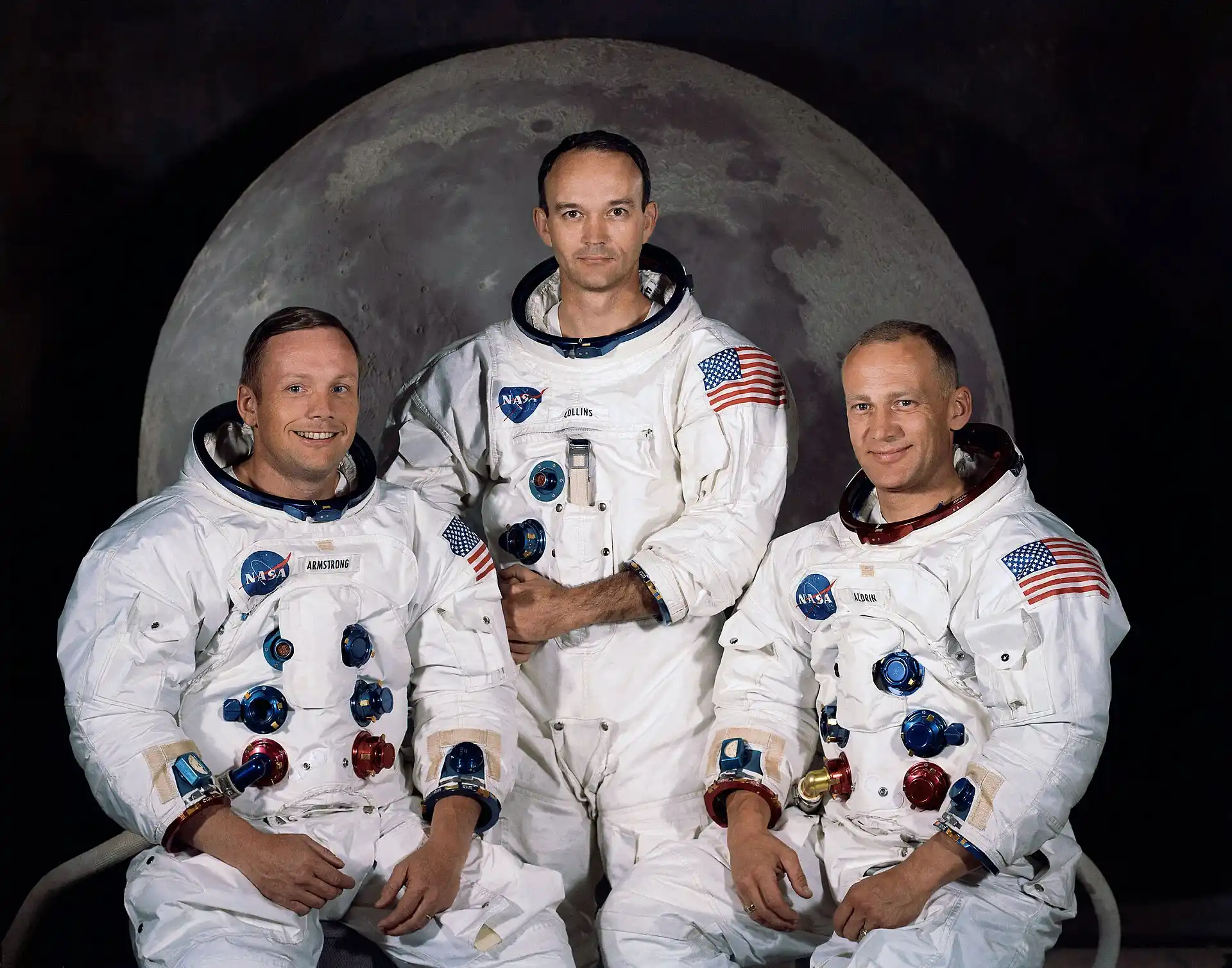
On July 20, 1969, American astronauts Neil Armstrong and Buzz Aldrin achieved one of humanity's greatest milestones by landing the Apollo 11 Lunar Module, named Eagle, on the surface of the Moon. During the tense descent, Armstrong had to take semi-manual control of the spacecraft to avoid a boulder-strewn crater. He ultimately touched down in the Sea of Tranquility with less than a minute of descent fuel remaining, famously broadcasting to Earth: "Houston, Tranquility Base here. The Eagle has landed."
Hours after touchdown, Armstrong exited the module to become the first person to step onto the lunar surface, delivering the immortal words: "That's one small step for [a] man, one giant leap for mankind." Aldrin joined him shortly after, describing the striking landscape as "magnificent desolation." Together, they spent over two hours outside the spacecraft, planting the United States flag, conducting scientific experiments, and collecting 47.5 pounds of lunar material to return to Earth.
While Armstrong and Aldrin explored the surface, command module pilot Michael Collins orbited above in Columbia, preparing for their rendezvous. After 21.5 hours on the lunar surface, the two astronauts successfully ignited the Eagle's ascent stage and reunited with Collins. This historic achievement fulfilled a national goal set in 1961, effectively ending the Space Race and securing a monumental scientific victory.