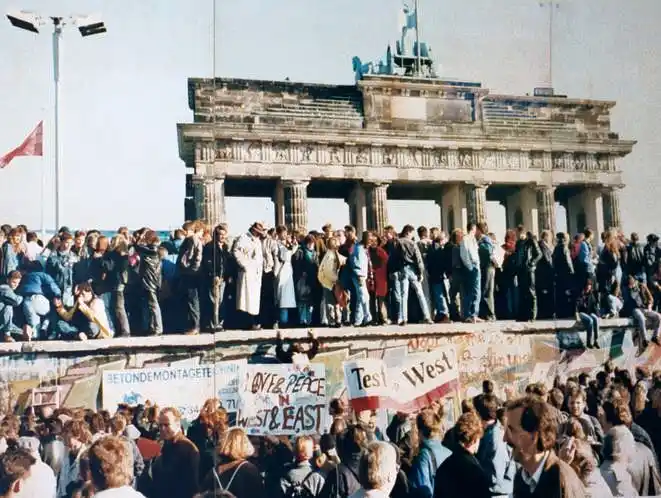
The fall of the Berlin Wall on November 9, 1989, stands as a defining moment of the 20th century, symbolizing the collapse of the Iron Curtain and the impending end of the Cold War. The events leading up to this historic night were driven by a wave of pro-democracy movements sweeping across Eastern Europe, notably the Peaceful Revolution in East Germany. Citizens of the German Democratic Republic (GDR) had grown increasingly frustrated with the oppressive communist regime and restricted travel. Earlier in 1989, neighboring countries like Hungary began dismantling their border controls, allowing thousands of East Germans to flee to the West. As mass protests erupted in cities like Leipzig, the East German government faced overwhelming pressure to enact reforms and ease strict travel restrictions.
The catalyst for the wall's opening was a hastily organized press conference on the evening of November 9, led by East German official Günter Schabowski. Tasked with announcing relaxed travel regulations, Schabowski was poorly briefed and mistakenly declared that East Germans could cross the border "immediately, without delay." The broadcast of this statement sent shockwaves through the divided city. Within hours, massive crowds of ecstatic East Berliners gathered at the border checkpoints, demanding entry. Overwhelmed by the peaceful but insistent mob and lacking clear orders, the border guards ultimately yielded. They opened the gates, allowing thousands to flood into West Berlin, greeted by jubilant celebrations. People danced on the wall, embraced strangers, and began chipping away at the concrete barrier with hammers and chisels.
The physical dismantling of the Berlin Wall continued over the following months, carried out by souvenir hunters known as "wall woodpeckers" and later by industrial equipment. The fall of the wall initiated a rapid chain reaction that completely transformed the political landscape of Europe. It paved the way for the official reunification of Germany on October 3, 1990, ending decades of painful division. Furthermore, this monumental event accelerated the collapse of the Soviet Union and communist regimes throughout the Eastern Bloc, permanently altering global geopolitical dynamics and reuniting a fractured continent after decades of the Cold War.