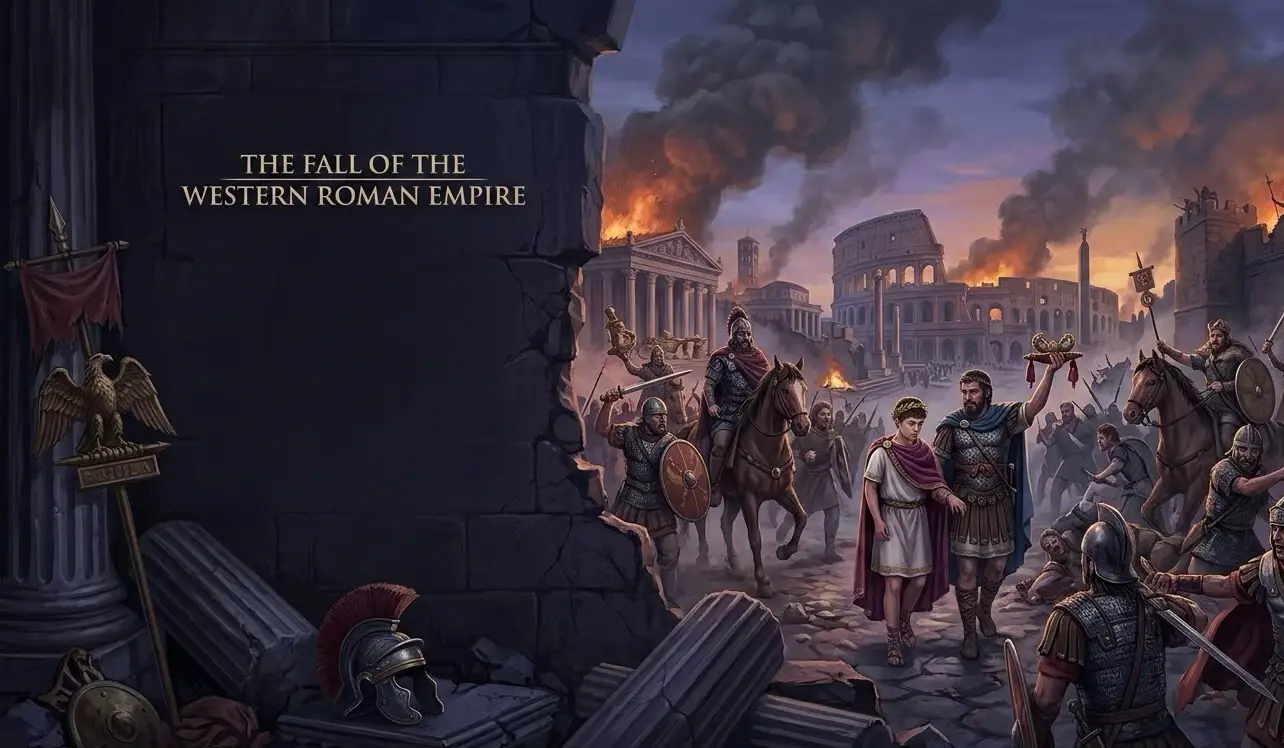
The fall of the Western Roman Empire was a complex, centuries-long process of decline involving continuous invasions by Germanic tribes, military failures, internal power struggles, and severe economic instability. However, the definitive end of the Western Roman Empire is historically marked by the events of the year 476 AD.
By the late 5th century, the Western Roman Emperor wielded virtually no military, political, or financial power, as various barbarian kingdoms had already established control over much of the former empire's territory. In September 476, the Germanic warlord Odoacer deposed the teenage emperor Romulus Augustulus in Italy. Unlike previous barbarian commanders who often ruled through puppet emperors, Odoacer did not appoint a Western successor. Instead, he forced the Roman Senate to send the imperial insignia to the Eastern Roman Emperor Zeno in Constantinople, signaling that the Roman Empire needed only one emperor.
Odoacer subsequently established himself as the King of Italy. While the Eastern Roman (Byzantine) Empire survived and thrived for centuries longer, the year 476 marked the permanent termination of Roman imperial rule in the West. This pivotal date is traditionally viewed by historians as the definitive boundary separating Antiquity from the dawn of the Middle Ages in Europe.