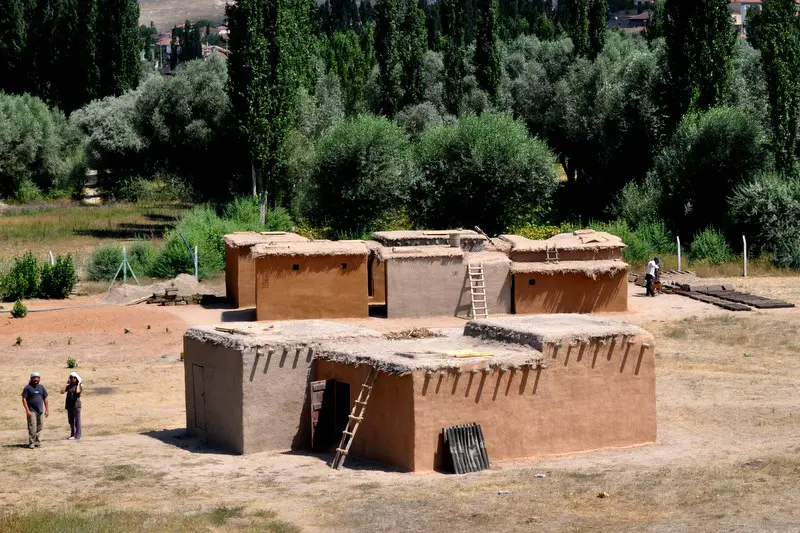
The Neolithic, or New Stone Age, is the final division of the Stone Age, spanning roughly from 10,000 BC to 2,000 BC. It represents a monumental turning point in human history, characterized by the "Neolithic Revolution"—a series of profound developments that independently emerged in various regions around the world, most notably starting in the Epipalaeolithic Near East.
Unlike the hunter-gatherer lifestyle of the preceding Paleolithic and Mesolithic eras, the Neolithic period introduced the widespread practice of agriculture and the domestication of animals. Early farmers cultivated founder crops like wheat, lentils, peas, and flax, while also domesticating sheep, goats, cattle, and pigs. This shift allowed communities to produce surplus food, which in turn supported a transition from nomadic lifestyles to permanent, sedentary settlements. Early towns like Jericho emerged with mudbrick houses, protective walls, and organized structures.
Alongside agriculture, the Neolithic period is defined by major technological advancements. Moving away from the flaked stone tools of earlier eras, Neolithic people created refined, polished, and ground stone tools, such as stone axes, which were crucial for clearing forests and expanding farmland. They also developed pottery for storage and cooking, and early forms of weaving. While most early Neolithic societies were relatively egalitarian, the accumulation of resources and livestock eventually laid the groundwork for social stratification and wealth inequality.
Importance
The Neolithic period is of paramount importance as the foundational era of modern human civilization. The Agricultural Revolution fundamentally transformed how humans interacted with their environment. By establishing a sedentary lifestyle, generating food surpluses, and fostering population growth, the Neolithic era paved the way for complex societies, the division of labor, the creation of permanent cities, and eventually the rise of states, writing, and advanced technologies.